Bury Our Bones in the Midnight Soil by V.E. Schwab
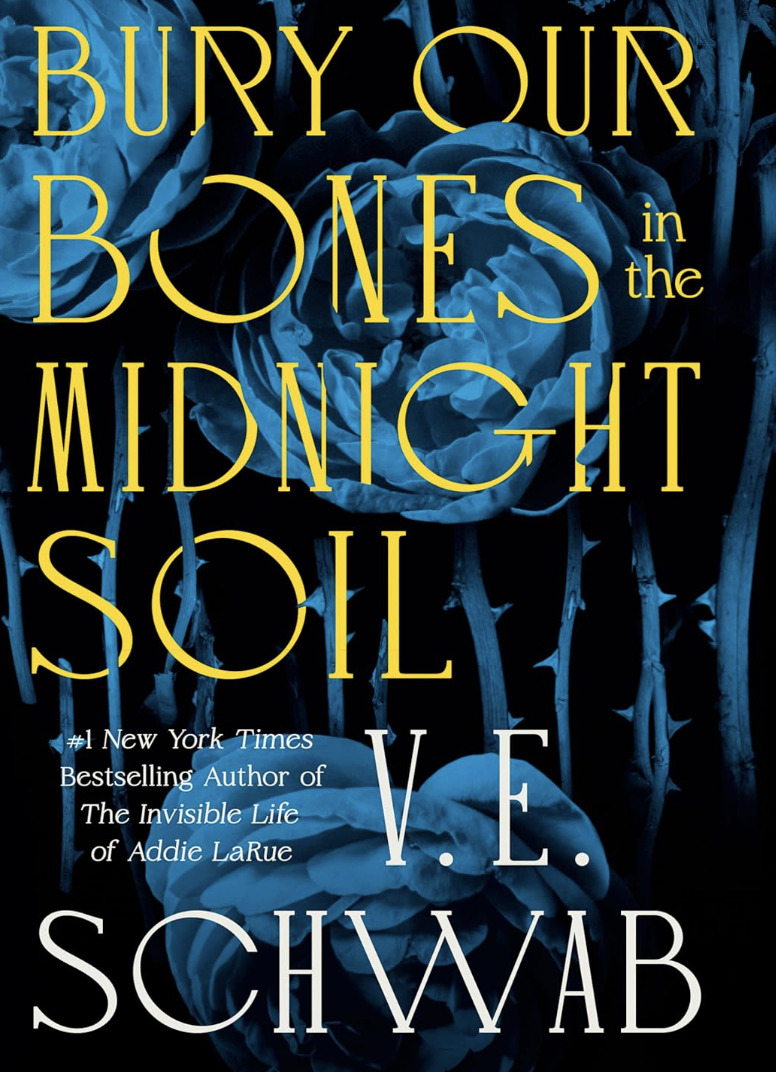
V.E. Schwab opens Bury Our Bones in the Midnight Soil with a statement of intention so direct that it reads almost like a warning: "This is a story about hunger." Everything that follows — the centuries, the continents, the women who love each other across time and violence — is an elaboration of that single word. Schwab is not writing a romance that happens to involve vampires. She is writing a study in what hunger does to a person, what it makes possible and what it destroys, and why the thing we call desire and the thing we call need are not reliably distinguishable.
The novel, published in 2025, was one of the most discussed books in the fantasy and dark fiction community for much of the year. It generated the specific kind of sustained conversation that marks books which are doing something more than entertaining — books that people feel the need to interpret rather than simply recommend.
The Structure
Bury Our Bones in the Midnight Soil follows multiple timelines across multiple centuries, each centered on a different relationship between its primary figures. The protagonist — a vampire of ambiguous morality and significant age — moves through history, accumulating and losing connections with a series of women across different historical moments. The timelines are not chronological, and the meaning of any given relationship shifts as the reader gathers more context for it.
This structure requires patience. Schwab provides the thread that makes patience worth extending: each timeline has its own complete emotional arc, and the connections between them — which become more visible as the novel progresses — create a cumulative effect that no single timeline could generate. By the final chapters, the reader has assembled a portrait of a consciousness shaped by centuries of loss, and that portrait is more complex than any direct account of it could have been.
The primary historical settings move from 1532 Santo Domingo de la Calzada — where a young woman makes a choice the novel treats without moral simplification — through 1827 London, forward toward the present. Each setting is distinct in atmosphere and in the specific texture of what women can and cannot do within it, and Schwab is attentive to these specificities without allowing the historical detail to become a lecture.
The Vampire as Figure
The vampire has been interpreted as many things across the history of the genre — as aristocratic predator, as sexual threat, as colonial metaphor, as Romantic archetype. Schwab adds something to this tradition: the vampire as figure of sustained desire, of longing that exceeds its objects and outlasts them, of the specific tragedy of wanting things that are finite in a life that is not.
This is not a new idea, but Schwab executes it with particular seriousness. Her protagonist's hunger is not glamorised in any straightforward sense. It is shown in its full cost — to the people she consumes, to herself, to the relationships that cannot survive what she is — and the novel's emotional argument is built on the gap between what she desires and what she is capable of sustaining. The sapphic dimension of the relationships is not incidental to this — it adds a layer of historical complexity, of desire complicated by social prohibition as well as supernatural predation, that enriches rather than decorates the central theme.
What Schwab Does Better Here Than Before
Readers familiar with Schwab's earlier work — the Darker Shade of Magic trilogy, the Villains duology — will recognise the prose style: elegant, controlled, with a preference for the precise sentence over the atmospheric accumulation. What is different in Bury Our Bones is the emotional register. The earlier books were technically accomplished and frequently entertaining. This one is something closer to serious.
The seriousness is not portentousness. Schwab does not announce that she is doing Important Work. She simply builds the novel in a way that requires the reader to engage more deeply than entertainment alone demands — to track relationships across time, to revise earlier understanding as later information arrives, to stay with a protagonist whose history of harm makes straightforward sympathy difficult without making engagement impossible.
Multiple reviewers describe the experience of reading Bury Our Bones as feeling seen — the kind of response that suggests the book is doing emotional work that exceeds its immediate narrative. Schwab is writing about survival, about the things people do to keep themselves intact across circumstances that were designed to reduce them, and she is writing about it with the specificity that distinguishes genuine engagement from mere sympathy.
A Note on Darkness
Bury Our Bones in the Midnight Soil is a dark book, but its darkness is not primarily the darkness of violence or horror. It is the darkness of duration — of what it costs to keep existing across centuries of loss, of what hunger eventually becomes when nothing satisfies it, of what a person is left with when they have outlived everyone they loved.
For readers who come to this library primarily for the action-forward darkness of grimdark fantasy, that may be a different kind of experience than they are looking for. For readers who come for the exploration of what dark fiction can carry, it is one of the more rewarding books published in 2025.
The title, finally, earns itself. Bones are what remains after hunger has done its work. The midnight soil is what eventually takes everything. The question the novel spends its considerable length asking is whether anything — love, memory, the specific shape of one person's desire for another — survives the process.
Schwab's answer is not simple. It is, however, honest.