Jonathan Strange & Mr Norrell by Susanna Clarke: English Magic Returns, and It Is Stranger Than Anyone Expected
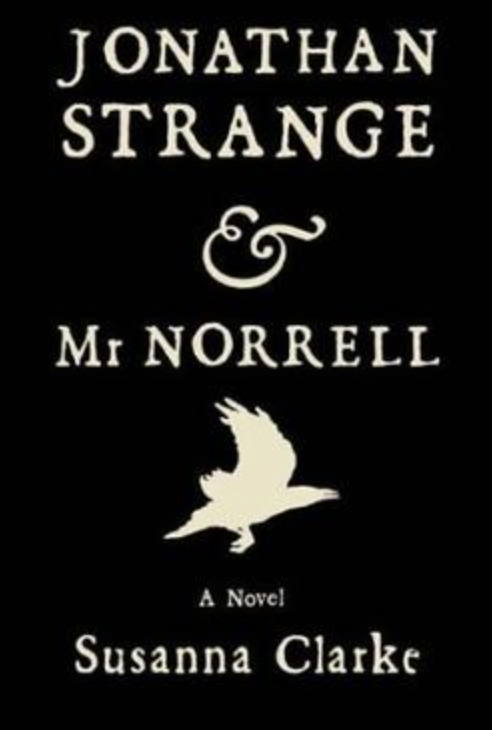
Susanna Clarke spent ten years writing Jonathan Strange & Mr Norrell. She worked on it in the mornings before her regular job, and by the time Bloomsbury published it in 2004, it had become something that defies easy categorization — a fantasy novel written in the style of a nineteenth-century English novel, complete with footnotes, nested narratives, and the particular quality of prose that makes you feel you have found a book that was always there, waiting to be discovered rather than written.
It won the Hugo Award. It was shortlisted for the Whitbread Prize. It sold over four million copies. The BBC adapted it in 2015 with a cast that understood exactly what kind of story they were telling. And it remains, twenty years after publication, one of the most genuinely original works the fantasy genre has produced — a book that could only have been written by someone who loved both English literature and English magic with equal and obsessive depth.
Magic Returns to England
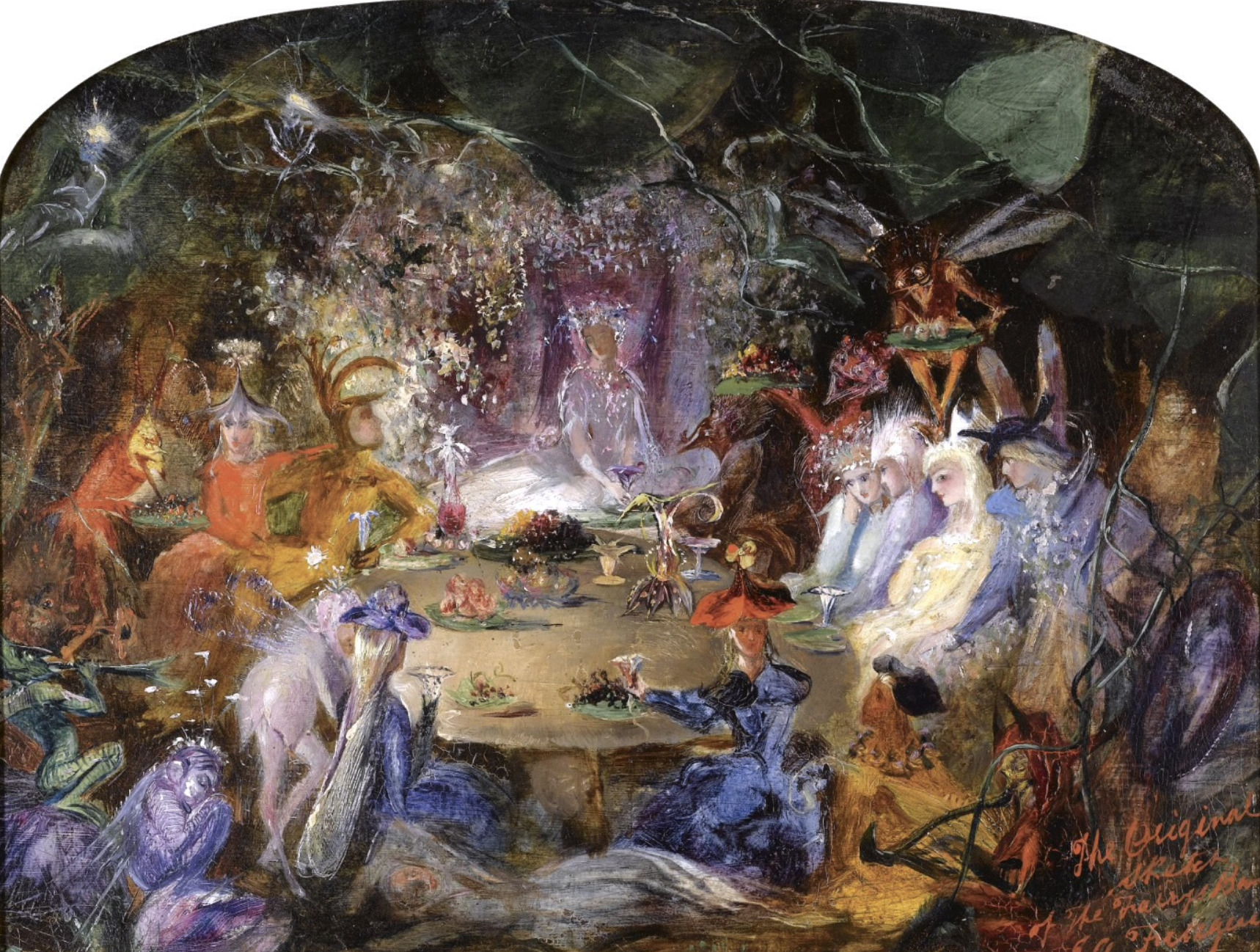
The novel is set in an alternative version of England during the Napoleonic Wars. In this version of history, magic was once a real and practiced discipline — the domain of the Raven King, a mysterious figure named John Uskglass who ruled northern England from Faerie for three hundred years before disappearing, leaving behind a tradition that gradually declined into theory and scholarship rather than practice. By 1806, when the novel begins, there are plenty of men who call themselves magicians. None of them can actually do magic.
Gilbert Norrell can.
Norrell is a reclusive, pedantic, profoundly difficult man living in Yorkshire, surrounded by one of the largest private libraries of magical texts in England. He has taught himself, through decades of solitary study, to perform actual magic — and his first act upon revealing this to the world is to make the stone statues of York Cathedral speak. The magical community of England is simultaneously thrilled and unsettled. Norrell himself is more unsettled than anyone, because he knows something about English magic that he has no intention of sharing.
The second magician, Jonathan Strange, arrives a few years later — younger, more intuitive, more socially graceful, and far less careful. He becomes Norrell's student, then his collaborator, then his assistant to the Duke of Wellington in the Peninsular Campaign. Then, inevitably, his rival.
Victorian Prose as Fantasy Architecture
The first thing readers notice about Jonathan Strange & Mr Norrell is the prose, and it is the right thing to notice. Clarke writes in a style that is a precise and loving recreation of early nineteenth-century English narration — measured, ironic, formally polite, and capable of enormous comedy through understatement. The narrator observes the events of the novel with the detached authority of someone who has had access to documents and accounts that the reader has not, and who is confident that the full picture is more interesting than any single perspective suggests.
The footnotes deserve particular attention. Clarke uses them not for academic citation but for additional narrative — short essays on the history of English magic, biographical sketches of obscure magicians, accounts of magical events that illuminate the main text from unexpected angles. Some of the footnotes are themselves several pages long. They are not supplementary material. They are part of the architecture of the novel, and they create the impression that the world of the book extends far beyond what the narrative chooses to show directly. Reading them is one of the specific pleasures of the novel that no adaptation can fully reproduce.
This stylistic choice is either the book's greatest achievement or its most significant barrier depending on the reader. Those who love Dickens, Austen, and Thackeray will feel immediately at home. Those who find nineteenth-century narrative conventions frustrating will need patience. Clarke commits to the style completely and without apology. There is no modern concession to faster pacing or more direct expression. The novel moves at the speed it moves, and it is entirely confident that the destination is worth the journey.
A Portrait of Two Incompatible Minds
The relationship between the two magicians is the novel's structural center, and Clarke renders it with a psychological precision that the Victorian style serves rather than obscures.
Gilbert Norrell is one of the most fully realized difficult characters in recent fantasy. He is not a villain — he is something more interesting and more frustrating than that. He is a man of genuine intellectual achievement and genuine moral smallness, a person whose love of magic is entirely real and whose relationship with power is entirely compromised. He wants English magic restored, but only in the form he controls. He wants a student, but only one who will remain subordinate. He is cautious, envious, secretive, and occasionally capable of great harm through inaction and self-deception rather than malice. Clarke neither excuses him nor reduces him. He is comprehensible at every moment, which makes him more uncomfortable than a straightforward antagonist would be.
Jonathan Strange is in many respects Norrell's opposite — instinctive where Norrell is methodical, socially present where Norrell is withdrawn, willing to follow magic wherever it leads where Norrell insists on directing it. He is also more sympathetic, which is partly structural and partly the result of his being placed in situations that require genuine courage. His involvement in the Napoleonic campaigns — using magic to move roads, to raise the dead for intelligence purposes, to reshape landscapes during battle — is among the most original material in the novel, and it is handled with a deadpan matter-of-factness that makes it funnier and more alarming simultaneously.
Their inevitable conflict is not a simple opposition of good and bad instincts. Both men are right about things. Both are wrong about things. What separates them is what they are willing to risk — and for what purpose.
England's Absent Center
Running beneath the entire novel, never fully present, is the figure of John Uskglass — the Raven King, the first and greatest English magician, who brought magic from Faerie three centuries before the novel begins and whose influence on the landscape and traditions of England has never fully receded despite his disappearance.
Clarke uses Uskglass with extraordinary skill. He appears directly in the novel for very little of its length, and yet he is everywhere in it — in the footnotes, in the landscape, in the magical theory that Norrell and Strange argue about, in the fairy roads that run beneath the visible world, in the specific quality of English magic as distinct from any other kind. He is the novel's organizing absence, the answer to questions the characters keep asking without quite realizing they are asking them.
The mythology Clarke builds around him — the three great acts of the Raven King, the nature of his bargain with Faerie, the reason for his departure — is revealed slowly and incompletely, which is precisely right. Uskglass is not a mystery to be solved. He is a presence to be understood, and Clarke understands that full explanation would diminish rather than satisfy.
Where the Novel Gets Dark
Jonathan Strange & Mr Norrell is, for most of its length, a comedy of manners with magical elements — urbane, witty, formally composed. Then the fairy world enters, and the novel changes register entirely.
The gentleman with the thistledown hair — a Faerie lord who becomes entangled in the plot through one of Norrell's early and catastrophically unwise decisions — is one of the most genuinely unsettling presences in recent fantasy. He is not evil in any comprehensible sense. He is simply entirely outside human moral categories — beautiful, playful, cruel without malice, and completely incapable of understanding why the things he does to the humans around him might constitute harm. He is a being for whom time, consequence, and the interior lives of others are simply not real in the way they are real for people.
His sections of the novel carry a quality of dread that the Victorian prose style makes more rather than less effective. The formal composure of the narrative voice describing genuinely terrible things creates an uncanny gap that is more disturbing than explicit horror would be. Clarke knows exactly what she is doing with the contrast.
Why It Lasts
Twenty years after publication, Jonathan Strange & Mr Norrell has not become a historical curiosity. It is still being discovered by new readers, still recommended as one of the works that demonstrates what fantasy can do at its most ambitious. The reason is not simply its originality, though it is extraordinarily original. It is that the novel is doing several things simultaneously — it is a comedy, a war novel, a psychological study, a mythology, a ghost story, and a meditation on the nature of English identity and the relationship between scholarship and practice — and doing all of them with sufficient skill that none feels sacrificed for the others.
Clarke has since published Piranesi (2020), a short novel utterly unlike this one in style and scale, and equally celebrated. The two books together suggest a writer of unusual range and patience — someone for whom the work takes the time it takes, and who produces something worth waiting for.
If you have been postponing Jonathan Strange & Mr Norrell because of its length — it runs to over a thousand pages — this is the encouragement to stop postponing. The length is not padding. It is the space the novel needs to build the world it is building. Readers who give themselves to it fully tend to report that they are not ready for it to end.
That is the rarest thing a long book can achieve.