Six of Crows by Leigh Bardugo: A Heist Story That Earns Every Page
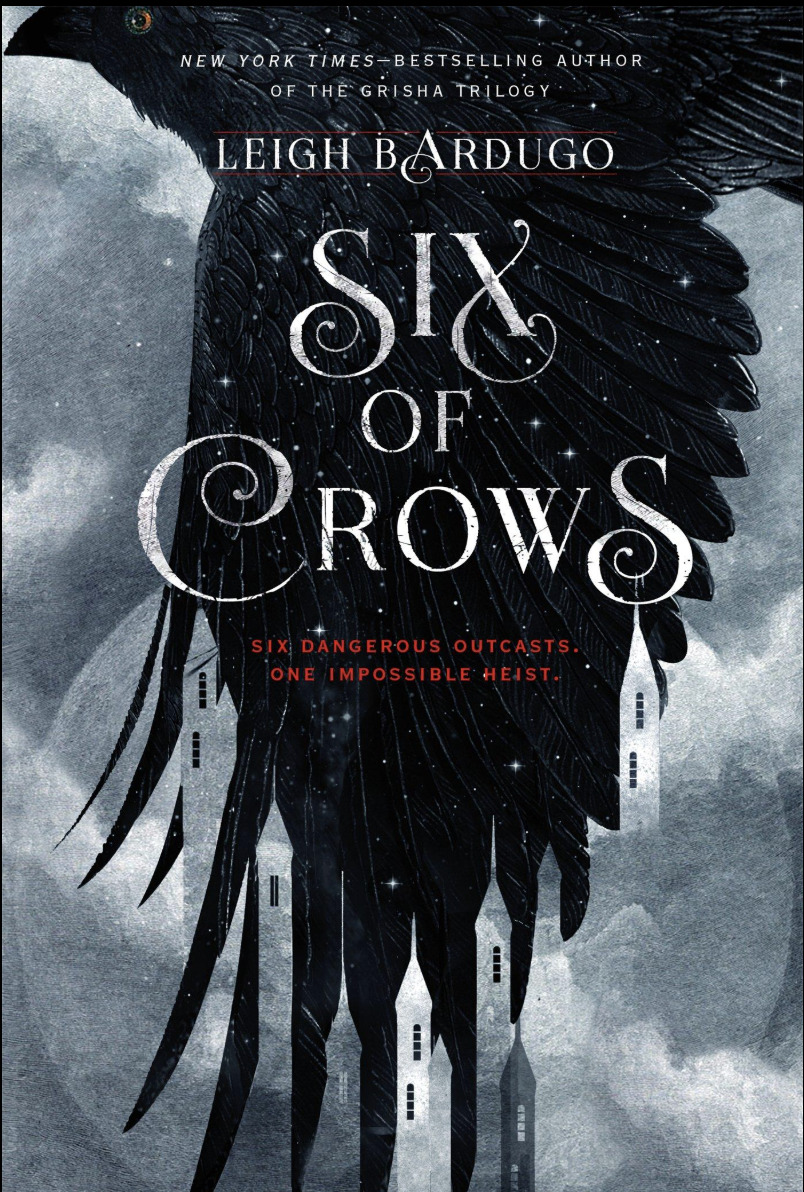
There are heist stories, and then there is Six of Crows. Leigh Bardugo's 2015 novel takes the mechanics of a classic heist narrative — the impossible target, the mismatched crew, the sequence of plans that collapse into improvisation — and rebuilds them inside a fantasy world of such specific gravity that the genre itself feels enlarged by the exercise. It is the book that made Bardugo's reputation rightfully inescapable, and it deserves every reader it has found.
The Setup: An Impossible Job, an Unlikely Crew
The premise is clean and deliberate. Kaz Brekker, teenage criminal prodigy and de facto leader of a gang called the Dregs, is offered a job no sane person would accept: break into the Ice Court of Fjerda, the most impenetrable prison-fortress in the known world, and extract a Shu Han scientist named Bo Yul-Bayur before a rival faction can do the same. The scientist has developed a drug called jurda parem that amplifies the powers of Grisha — people who can manipulate matter and living systems — to catastrophic levels. In the wrong hands, the formula could destabilize every government on the continent.
Kaz accepts. He assembles five others. The novel is what happens next.
The crew is one of Bardugo's clearest achievements. She gives each of her six thieves a specific weight — a history, a wound, a way of moving through the world that belongs only to them — without stopping the narrative to deliver any of it as formal backstory. The histories arrive in fragments, through action, through the particular way each character reacts when things go wrong. And things go wrong constantly.
The Characters: Six Voices, Six Kinds of Damage
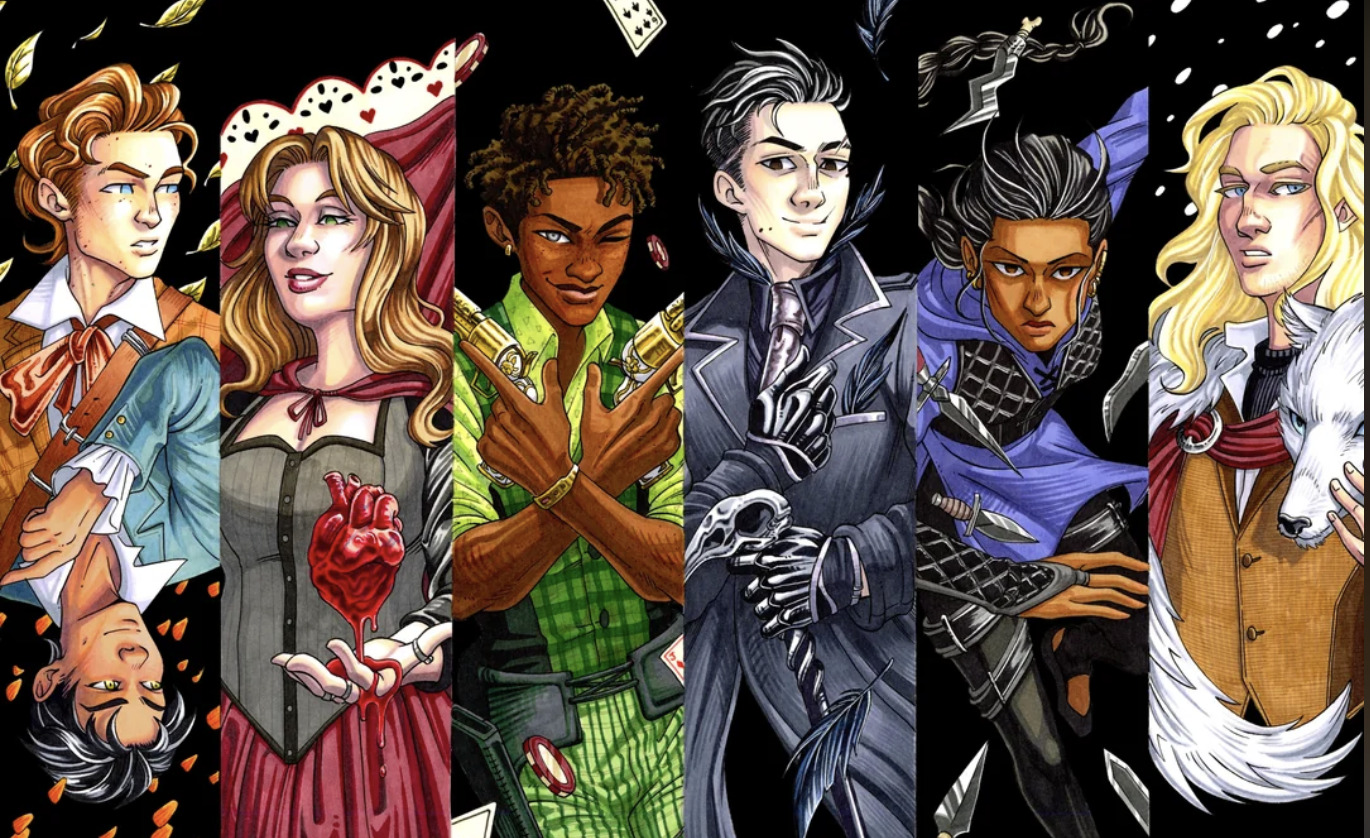
Kaz Brekker is the center of gravity. He is cold, methodical, and ruthless in ways the novel neither excuses nor sentimentalizes. He is also funny — dryly, precisely funny — in a way that never softens how genuinely dangerous he is. He walks with a cane. He never removes his gloves. Both of these facts matter, and Bardugo handles their explanation with the patience of someone who understands that withheld information is its own form of storytelling.
Inej Ghafa, the Wraith, is perhaps the most fully realized character in the book. A former indenture rescued from a terrible situation, she works for Kaz as a spy and acrobat and holds onto her faith in the Suli saints with the determination of someone who has decided belief is a choice worth making repeatedly. Her relationship with Kaz is the emotional engine of the novel — a study in two people who understand each other and cannot quite reach each other, which is a more interesting dynamic than most fantasy romances manage.
Jesper Fahey is a sharpshooter and compulsive gambler, and the novel's most reliably entertaining voice — restless, self-aware about his own self-destructiveness, loyal in ways he expresses through sarcasm. Wylan Van Eck is a merchant's son turned runaway, awkward and determined, carrying a secret that reframes his character significantly. Nina Zenik is a Grisha Heartrender, warm and capable and politically complicated in ways the plot eventually requires. And Matthias Helvar, a Fjerdan soldier who views Grisha as fundamentally corrupted, provides the book's most interesting ideological tension — a character whose entire belief system is being dismantled in real time.
None of them are heroes in the conventional sense. All of them are compelling.
The World: Ketterdam as Character
Six of Crows is technically set in the Grishaverse — the same world as Bardugo's Shadow and Bone trilogy — but it functions as an entirely independent reading experience. No prior knowledge is required. The world-building here is self-contained and purposeful rather than expository.
Ketterdam is the city where the novel begins, and it deserves particular attention. Bardugo built it from the bones of seventeenth-century Amsterdam — canal districts, merchant guilds, a financial system run on controlled debt, an underworld organized with corporate efficiency. It smells of salt water and bad decisions. The Barrel, Ketterdam's criminal district, operates on its own internal logic: reputation is currency, information is infrastructure, and violence is a business expense rather than a passion.
The city is not background dressing. It is pressure. Every choice the characters make is shaped by the specific social architecture of Ketterdam — who owes what to whom, which alliances can be leveraged, which debts can be called in and at what cost. Bardugo thought this world through, and it shows in the way the plot and the setting reinforce each other rather than running parallel.
The Ice Court of Fjerda, the heist's target, is constructed with equal care. Its security systems, its layout, its cultural logic — all of it is established in enough detail that the sequence of infiltration and failure and improvisation lands with weight. A heist only works on the page if the reader understands exactly what the obstacles are. Bardugo does the architectural work.
Structure and Pacing: Built Like a Clockwork
The novel rotates through the six characters' perspectives, each chapter heading signaling whose interior we are in. This is a demanding structure — six viewpoints is a lot to manage — and Bardugo handles it with more discipline than most authors who attempt it. Each character's sections have a distinct texture. Kaz's chapters are controlled and analytical. Inej's are quieter and more interior. Jesper's are faster, more impatient with their own observations.
The pacing is one of the novel's clearest pleasures. Bardugo understands the rhythm of a heist — the planning sequences that feel almost leisurely, the compression once the action begins, the moments of forced pause that generate a different kind of tension. She knows when to let the reader breathe and when not to.
The novel is also genuinely funny in places, which is rarer in dark fantasy than it should be. The humor is character-specific rather than tonal — it emerges from who these people are rather than from any authorial lightness about the material. The stakes are real. The humor acknowledges that people under pressure sometimes say exactly the wrong thing, and that this is one of the more human things about them.
What the Book Is Asking
Underneath the plot mechanics, Six of Crows is interested in a set of questions it does not rush to answer. What do people owe each other when they have been shaped by systems designed to damage them? Can someone whose entire identity has been built around survival make room for something that resembles loyalty? What is the difference between using people and needing them?
Kaz and Inej carry most of this weight. Their dynamic — built on mutual recognition, professional dependence, and a tenderness neither of them fully acknowledges — is handled without sentimentality or easy resolution. Bardugo does not reward them cheaply, which makes whatever the reader feels about them more honestly earned.
The novel does not resolve its thematic questions completely. It is the first book in a duology, and Crooked Kingdom — its sequel — is where the larger reckonings happen. But Six of Crows sets them up with enough seriousness that the reader feels their weight from the beginning.
The Verdict
Six of Crows is the rare fantasy novel that functions simultaneously as a thriller, a character study, and a pure entertainment, without cheating any of them. It is plotted with precision, peopled with characters who earn their complexity, and set in a world that feels built rather than described.
The sequel delivers on everything this book promises. But the promise itself is extraordinary, and it is made on the first page and kept on every page that follows.
If you have been told this is a Young Adult novel and have been hesitating on that basis — do not hesitate. The label describes the marketing category. It does not describe the experience.