The Name of the Wind by Patrick Rothfuss: The Legend Tells His Own Story
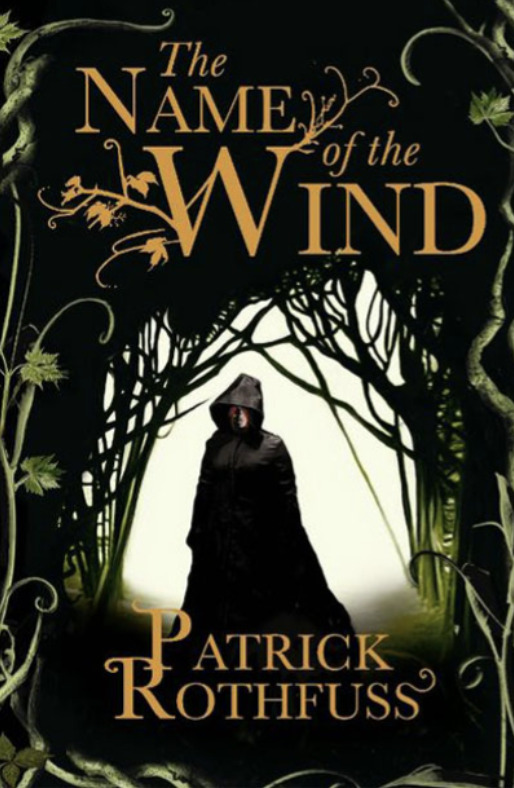
Patrick Rothfuss spent fourteen years writing The Name of the Wind before it was published in 2007. He had started it as a student, revised it obsessively, and submitted it to a contest that gave him the money to keep working on it. By the time it reached readers, it had been through more drafts than most authors complete in a career. That duration shows — not as heaviness or over-elaboration, but as a kind of settled confidence in every sentence. This is a book that knows exactly what it is.
What it is, among other things, is one of the most accomplished fantasy debuts ever written.
A Legend in Hiding
The novel opens not with action but with atmosphere. A village called Newarre, somewhere in a kingdom that is clearly in the process of falling apart. Strange things are happening in the world — demon-like creatures called scrael appearing where they have no business appearing, war somewhere in the distance, a sense of civilizational erosion that the narrative never quite explains. The inn at the center of Newarre is run by a quiet, red-haired man who calls himself Kote.
A travelling scribe called Chronicler arrives. He recognizes Kote. He knows who he really is: Kvothe — pronounced roughly like "quothe" — the most famous man alive. Sympist. Arcanist. Kingkiller. A figure so surrounded by legend that separating the story from the person has become essentially impossible. Chronicler wants the true account. Kvothe agrees to give it. Three days, three books.
The Name of the Wind is day one.
This frame structure is one of the novel's most important decisions, and Rothfuss executes it with a precision that only becomes clear in retrospect. The Kvothe of the frame — older, quieter, apparently diminished, running an inn in a forgotten village — provides a constant counterpoint to the Kvothe of the inner narrative, the young man burning with ambition and talent and the specific recklessness of someone who has not yet been taught what he cannot survive. The reader knows, from the first chapter, that something went wrong. The question of what, and how, runs beneath every page.
Prodigy, Orphan, Student
The autobiography Kvothe tells is not modest. He was born into the Edema Ruh — a traveling performer people, musicians and actors and acrobats who move through the world in wagons and are regarded with suspicion by settled society. His father was a musician composing an epic ballad about a mythological figure called Lanre. His mother was sharp and kind. His childhood was one of the most genuinely happy depictions of a performer's life in fantasy literature — warm, itinerant, full of music and language and the particular freedom of people who belong to their craft more than to any place.
Then it ends. What happens to the Edema Ruh camp when Kvothe is about eleven years old is not described in graphic detail, but its weight is carried through the entire novel and beyond. Rothfuss handles this with restraint and does not wring it for easy emotion. The loss is established and then left to do its work quietly.
What follows is a period of survival — Kvothe alone in a city called Tarbean, living rough, slowly going numb. These chapters are the most uncomfortable in the book, and deliberately so. They establish that the legend was assembled from actual experience, that Kvothe's competence was purchased at genuine cost, and that the person who eventually walks through the gates of the University is not the same person who left the burning camp.
Magic as Discipline
The University sequences are where the novel finds its full momentum, and they represent some of the best extended world-building in contemporary fantasy.
The magic system Rothfuss has constructed — called Sympathy — is unlike most of what the genre offers. It operates on the principle that two objects can be linked, and that energy transferred to one is transferred to the other in proportion to the strength of the mental bond. It is precise, exhausting, and genuinely dangerous. Insufficient concentration causes the Sympathist's own body to absorb the energy they are working with, which produces effects ranging from painful to fatal. The cost of magic is not vague or mystical. It is physical and cognitive and very specific.
Learning Sympathy requires something resembling genuine study. There are lectures, examinations, practical tests. There are different disciplines — Naming, which involves perceiving the true nature of things and calling them by their real names, is harder and older and treated with more reverence. Kvothe is exceptional at Sympathy from the beginning. He approaches Naming more slowly, with a caution that the narrative suggests is appropriate.
The University is also a social environment, and Rothfuss is as interested in its politics and hierarchies as in its curriculum. Kvothe is poor in a school that runs on tuition fees. He is conspicuously talented in an environment where conspicuous talent generates enemies as efficiently as it generates admirers. His antagonist — a nobleman's son named Ambrose — is not a villain in any melodramatic sense, but a representation of the specific kind of obstacle that wealth and social position construct for people without them. Their conflict is realistic in a way fantasy antagonism often avoids.
The Deepest Layer
The Name of the Wind is, before it is a magic story or an adventure story, a story about music. Kvothe's relationship with his lute is the most intimate thing about him — more revealing than his scholarship, more honest than his self-presentation, more connected to whatever he actually is beneath the legend.
Rothfuss writes about music with the authority of someone who understands what it means to practice something until it becomes physical memory. The passages describing Kvothe playing — the specific pieces, the technical demands, the way performance feels from the inside — are among the finest in the genre. They do not romanticize musicianship in the way that fiction about art usually does, treating it as magical inspiration rather than accumulated discipline. Kvothe is talented, but his talent is built on hours and years of deliberate practice that the novel documents with affection and specificity.
The Edema Ruh tradition, within which Kvothe was raised, treats music as a form of knowledge — a way of understanding and transmitting truth that language alone cannot carry. This idea runs through the entire novel and connects to the deeper magic of Naming in ways that are suggested rather than explained. Rothfuss is not interested in mechanical explanations. He is interested in the relationship between art and perception, between naming something and understanding it, between a song and the thing it describes.
Earned Confidence
Fantasy prose exists on a wide spectrum, and much of it errs toward utility — serviceable, transparent, designed to move the reader through events without drawing attention to itself. Rothfuss writes differently. His sentences are crafted with visible care, and the prose carries its own weight rather than simply transporting plot.
This occasionally becomes a liability. The novel is long. Some sequences — particularly in the middle, during certain stretches of University life — feel unhurried to a degree that tests patience. Rothfuss is more interested in texture than in momentum, and readers who came for plot efficiency may find the balance frustrating.
But the prose rewards the reader who moves at the book's own pace. The descriptions of music, of the University's architecture, of Kvothe's internal states during performance or during magic, have a precision and a beauty that justify the space they occupy. This is a writer who believes sentences matter, and who has spent enough time on each one to make that belief defensible.
The Honest Complications
No review of The Name of the Wind written in 2026 can ignore the context. The second volume, The Wise Man's Fear, arrived four years after the first. The third — The Doors of Stone — has not arrived at all, despite being announced and re-announced for well over a decade. The silence has become its own cultural phenomenon among fantasy readers, generating frustration, sympathy, dark humor, and occasional genuine anger in roughly equal measure.
This is real, and it matters to readers deciding whether to begin the series. There is a genuine risk of investing in a story that may not be completed in any predictable timeframe.
It does not change what The Name of the Wind is on its own terms. A novel does not become less accomplished because its sequels are delayed. The first book is complete as a reading experience — it tells Kvothe's first day, it raises questions it does not need to answer yet, and it ends at a place that feels structurally appropriate rather than simply truncated. If it were the only volume that ever existed, it would still be worth the time.
The Verdict
The Name of the Wind is a book that makes storytelling its own subject. Kvothe is not simply a character — he is an argument about the relationship between experience and legend, between what happened and what the story of it becomes. Rothfuss frames the entire novel as an act of narration, a man choosing which truths to tell and in what order, and that meta-awareness runs beneath every scene.
It is also, more simply, a novel about a young man learning things in an environment that is trying to break him, playing music that tells him who he is, and moving toward a catastrophe the reader can feel coming from the very first page.
Those two things — the philosophical structure and the human story — hold each other up. Neither would be sufficient alone. Together, they make something that the fantasy genre does not produce often enough: a book that is intelligent about what it is doing and genuinely moving while it does it.